
What is the multiplication tables check and how can you prepare
The Multiplication Tables Check (MTC) is a key stage 2 statutory assessment. This check is taken by children in June at the end of year 4. The The Multiplication Tables Check’s purpose is to ensure that each child’s times tables knowledge is at the expected level.
The Multiplication Times Tables Check is an online test where each pupil is asked 25 questions on times tables 2 to 12. Children are given 6 seconds to answer every question and in between each question, each child will get a 3-second rest. So the test should last less than five minutes.
How can I help my child prepare?
Preparing for the multiplication tables check in Year 4 involves a combination of practice, understanding, and memorisation. We recommending to start preparing early and try and build a daily short routine practising the times tables. With regular practice your child will learn all the questions and become confident with their times tables.
1. Use a multiplication poster
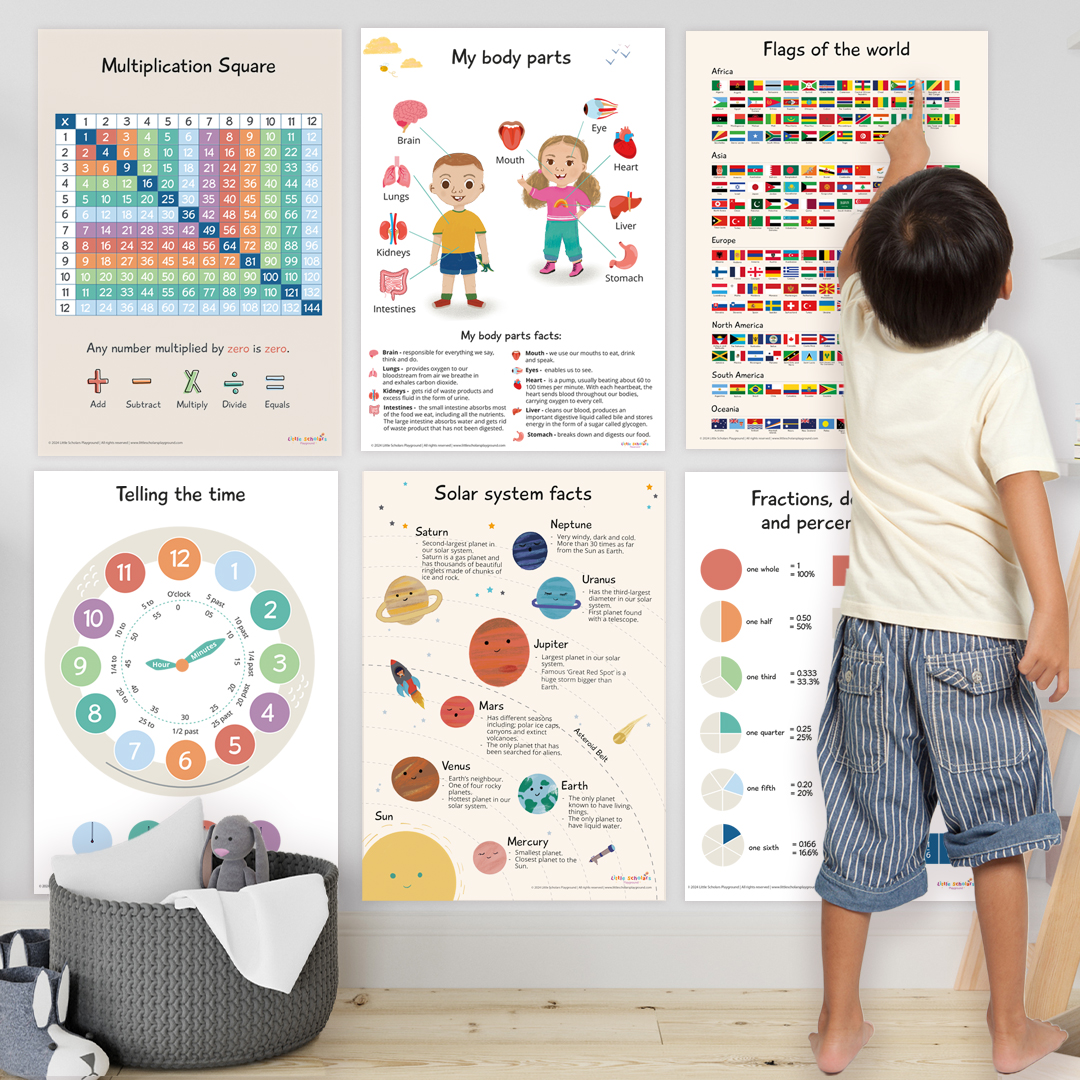
Children are visual learners, by putting up a multiplication poster, you will be surprised how quick their brains will absorb their times table. We have a multiplication square poster that can be bought as part of a bundle of posters here.
2. Understand multiplication concepts
Make sure you understand the concept of multiplication and its relationship to addition. Practice solving multiplication problems using different methods such as repeated addition and skip counting.
3. Practice regularly
Dedicate regular time each day to practice multiplication. Repetition is crucial for memorisation. Use flashcards, online games or worksheets to help your child master their multiplication tables.
4. Explore multiplication strategies
Learn different strategies for solving multiplication problems efficiently. For example breaking down larger problems into smaller, more manageable ones.
5. Track progress
Keep track of your child’s progress by regularly testing your child. Identify areas where they need improvement and focus your practice on those specific tables.
6. Stay positive and persistent
Learning multiplication tables can be challenging, but by maintaining a positive attitude and persevering progress will be made. Celebrate your child’s progress, this will encourage them to keep pushing forward.
Remember, consistent practice and understanding are key to success in mastering multiplication tables. Good luck to your little loved one! If you have any tips that has helped your child learn their multiplication tabels, let us know in the comments below.

Author

Natalie is the co-founder and illustrator at Little Scholars Playground. She is passionate about literacy, learning, illustrating, women in STEM and the Montessori practice.

